
Current Power Technologies installs Level 2 EV chargers in homes across Houston and San Antonio. If you’re ready to charge your electric vehicle in your own garage, carport, or driveway, our Licensed Master Electricians handle the whole project, from the first phone call through the final inspection. We’re a family-owned, licensed and insured electrical contractor and a Tesla Energy Certified Installer for home Tesla Wall Connector installations, so your charger goes in by electricians trained on that exact equipment.

When You Need to Install Your EV Charger, We Are Here
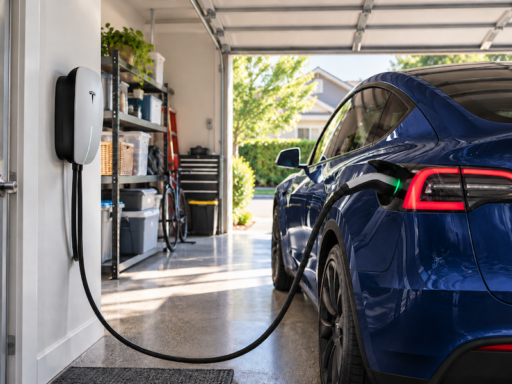
AT A GLANCE: WHAT’S INCLUDED
Choosing the Right Home Charging Setup
Most homeowners start with one question: Level 1 or Level 2? Level 1 charging runs off a standard household outlet and adds only a few miles of range per hour, which suits a plug-in hybrid you don’t drive every day. Level 2 charging runs on a dedicated 240-volt circuit and can fully charge most EVs overnight, which is why it’s the standard choice for home charging.
Once you’ve settled on Level 2, the next decision is equipment. As a Tesla Energy Certified Installer, we install the Tesla Wall Connector to Tesla’s own specifications for Tesla owners. If you drive a different EV, we install a universal Level 2 charger sized to your vehicle and your home’s electrical capacity. Either option can be hardwired directly to your panel or installed with a plug-in connection, and we’ll walk you through which setup fits your garage, your budget, and your electrical service. Many newer chargers also include smart charging features, like scheduling and load management, that help you charge during off-peak hours without overloading your home’s electrical service.
What We Check Before Installation
Before we run a single wire, we evaluate your home’s electrical system to confirm it can handle a new charger safely. That review covers your main panel’s available capacity, a load calculation against your home’s existing electrical demand, and the best route for breakers and wiring between your panel and the charger location. We also look at your garage, carport, or exterior wall to confirm mounting conditions. And we account for any standby generator, solar system, or smart-home equipment already tied into your electrical service, so the new charger works alongside what you already have.
Permits, Inspections, and HOA Considerations
Permit and inspection requirements depend on your city, your utility, and the scope of your project, so there’s no single rule that covers every Houston and San Antonio home. Current Power Technologies handles the permit application, schedules the inspection, and manages the paperwork on our end. You’ll need to confirm your lot and property details and, if your property has a homeowners association, check your deed restrictions before we start any exterior work. We’ll flag anything that looks like it needs HOA approval, but getting that approval in hand is on you.
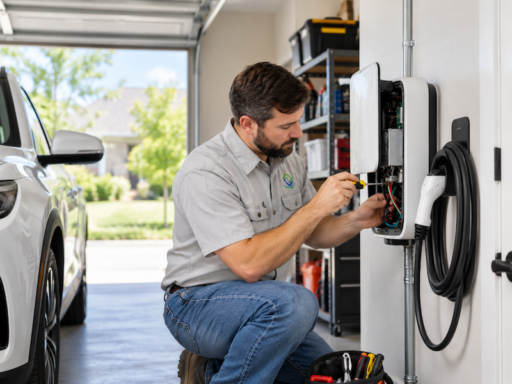
How We Install: Our Process
- 1Homeowner consultation to understand your vehicle, driving habits, and goals
- 2
Site and electrical assessment of your panel, wiring, and charging location
- 3
Charger and location recommendation based on your home and your EV
- 4
Written scope and quote before any work begins
- 5
Permit and inspection coordination where required
- 6
Installation of wiring, mounting hardware, and the charger itself
- 7
Commissioning, app setup, and a test charge
- 8
Final walkthrough and documentation for your records
Part of a Bigger Electrical Picture
An EV charger doesn’t operate on its own. It shares your home’s panel and electrical capacity with your air conditioning, your appliances, and, if you have one, your standby generator or solar system. Current Power Technologies also handles residential electrical work, generator installation, and smart-home wiring, so the same team that installs your charger already understands the rest of your home’s power. Each home still gets a charger setup suited to its own electrical system, planned with the full picture in mind.
What’s Included, and What Can Change the Scope
A straightforward installation covers the items in the at-a-glance list above. Some homes need more. Panel capacity, the distance between your panel and the charger location, wall construction, and whether the run goes outside or through finished space can all add time and material to a project. We’ll spell out what your home needs in a written quote before we start, so there are no surprises once the work begins.
Why Houston and San Antonio Homeowners Choose Current Power Technologies
We’re a family-owned, licensed and insured electrical contractor that’s worked on homes across Houston and San Antonio for years. As a Tesla Energy Certified Installer, our Licensed Master Electricians install home chargers to Tesla’s own specifications. And because we also handle residential electrical work and standby generators, we bring that same working knowledge of your home’s power system to your EV charger project.
Cost and Incentives
Every home is different, so we provide a project-specific quote after evaluating your panel, your garage or driveway, and the charger you want. Rebate and tax-credit programs for home EV chargers change often, and eligibility depends on you, your equipment, your utility, and when your project is completed. Check current federal, state, and utility sources directly before counting on a specific incentive, and ask us what applies to your project when we quote it.


